
Sodium: How Much Is Too Much, and Where It Comes From
The current Dietary Guidelines set a limit of less than 2,300 milligrams of sodium a day from age 14. Most Americans eat more, mainly from packaged and restaurant foods.
By Search & Report Editorial Team · Updated November 23, 2026 · 6 min read
Key takeaways
- The 2025-2030 Dietary Guidelines for Americans say people aged 14 and older should consume less than 2,300 milligrams of sodium a day.
- Americans consume more than 3,300 milligrams a day on average, according to the CDC.
- The FDA says over 70% of the sodium people eat comes from packaged and prepared foods, not from salt added at home.
- On a Nutrition Facts label, 5% Daily Value or less of sodium per serving is low, and 20% or more is high.
- Some people are given a lower limit by their clinician, and potassium-based salt substitutes are not suitable for everyone.
Sodium is a mineral the body needs in small amounts.1 Most Americans eat too much of it.2 This article covers the limit the current federal guidelines set, how much people actually eat, where it comes from and how to compare products.
Salt and sodium are not the same
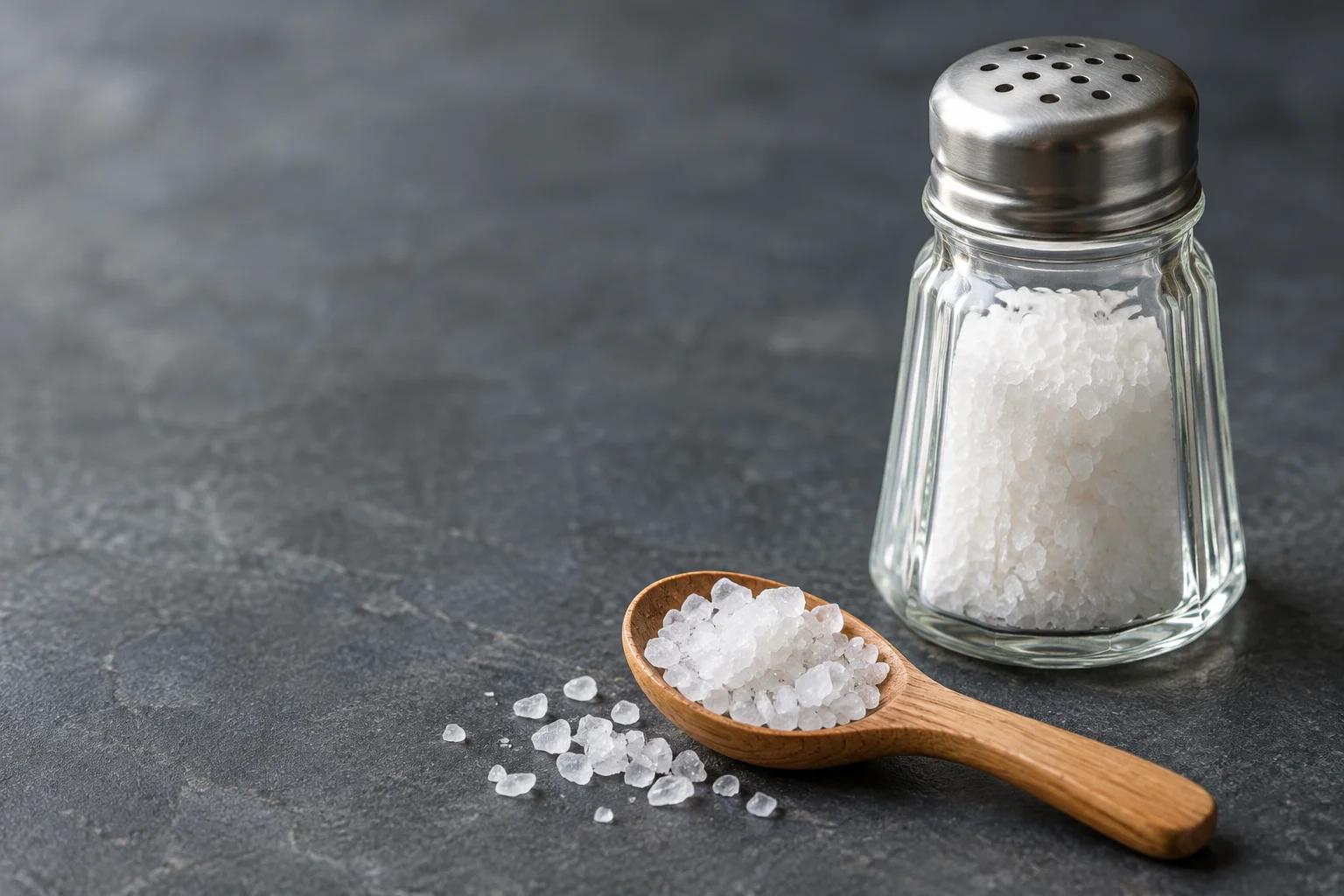
The two words are often used as if they mean the same thing. They do not. Table salt is sodium chloride, which is 40% sodium and 60% chloride. One teaspoon of table salt contains about 2,400 milligrams of sodium.3
The body uses sodium to keep its fluids in balance and to keep muscles and nerves working.1
In food, sodium does more than add a salty taste. It is used for curing meat, baking, thickening, holding in moisture, enhancing flavor and preserving.1
What the current guidelines say
The Dietary Guidelines for Americans, 2025-2030, were released in January 2026. They say the general population aged 14 and older should consume less than 2,300 milligrams of sodium a day. The limits for children are lower:4
| Age | Daily sodium limit |
|---|---|
| 1 to 3 | Less than 1,200 mg |
| 4 to 8 | Less than 1,500 mg |
| 9 to 13 | Less than 1,800 mg |
| 14 and older | Less than 2,300 mg |
The guidelines also note that sodium and other electrolytes are essential for hydration. They add that highly active people may benefit from more sodium to make up for what they lose in sweat.4
The Daily Value on food labels uses the same figure: less than 2,300 milligrams a day.1
Some eating plans go lower. The DASH eating plan, published by the National Heart, Lung, and Blood Institute, sets a daily sodium goal of 2,300 milligrams. It notes that 1,500 milligrams lowers blood pressure even further. DASH stands for Dietary Approaches to Stop Hypertension.5
How much people actually eat
Americans consume more than 3,300 milligrams of sodium a day on average, according to the Centers for Disease Control and Prevention (CDC).3 The U.S. Food and Drug Administration (FDA) puts the figure at about 3,400 milligrams.1 Estimates differ a little with the source and the survey years.
National survey data published by the U.S. Department of Agriculture give more detail. From August 2021 to August 2023, men aged 20 and older averaged 3,703 milligrams of sodium a day from food and drinks. Women averaged 2,750 milligrams.6
The CDC describes the average as well above the federal recommendation.2
Why too much sodium matters
Sodium attracts water. A diet high in sodium draws water into the bloodstream, which can increase the volume of blood and, in turn, blood pressure.1
The CDC says eating too much sodium can raise blood pressure and the risk of heart disease and stroke. Together, those two conditions kill more Americans each year than any other cause.3
The FDA adds that blood pressure generally rises with age, so limiting sodium becomes more important over time.1
Potassium matters here too. The CDC says that for people with high blood pressure, increasing potassium intake can help lower it. Most potassium in the diet comes from vegetables, fruit, seafood and dairy products.2 Extra potassium is not right for everyone, as the note on salt substitutes below explains.
Where the sodium comes from
Most of it does not come from the salt shaker. The FDA says over 70% of dietary sodium comes from packaged and prepared foods, not from salt added while cooking or eating.1
Taste is a poor guide. Some foods that do not taste salty, such as cereals and pastries, still contain sodium.1 Foods with only moderate amounts, such as bread, can be major sources because people eat them so often.2
The CDC lists these as top sources of sodium for U.S. adults, based on national survey data from 2021 to 2023:3
- Deli meat sandwiches
- Soups
- Pizza
- Poultry
- Savory snacks, such as chips, crackers and popcorn
- Pasta mixed dishes
- Breads, rolls and buns
- Cheese
- Meat mixed dishes
- Vegetables
The CDC notes that packaged or processed soups, vegetables and poultry often contain sodium. It suggests looking for options with little or no sodium.3
How to compare products
The Nutrition Facts label shows the sodium in a serving, in milligrams and as a % Daily Value. The FDA's rule of thumb is that 5% DV or less of sodium per serving is low, and 20% DV or more is high.1
The CDC suggests checking both the sodium per serving and the number of servings in the container, then choosing the option with the least sodium.7
Claims on the package have set meanings:1
| Claim | What it means |
|---|---|
| Salt-free or sodium-free | Less than 5 mg of sodium per serving |
| Very low sodium | 35 mg or less per serving |
| Low sodium | 140 mg or less per serving |
| Reduced sodium | At least 25% less sodium than the regular product |
| Light in sodium or lightly salted | At least 50% less sodium than the regular product |
| No-salt-added or unsalted | No salt is added during processing |
A "reduced sodium" product can still be high in sodium if the regular version has a lot. The milligrams settle it.
Ways to cut back
The CDC and the FDA suggest these steps:71
- At the store. Buy fresh, frozen or canned vegetables with no salt or sauce added. With fresh meat and poultry, check whether a saline or salt solution has been added.
- At home. Season with garlic, citrus juice, herbs, spices or salt-free blends. Rinse canned beans, tuna and vegetables, which removes some of the sodium. Limit sauces, mixes and instant products.
- Eating out. Ask for nutrition information before ordering. Ask that no salt be added, and that sauces and dressings come on the side.
Taste adjusts. The FDA says that as people eat less sodium, their taste for it gradually decreases.1
Personal choices only go so far when most sodium is already in the food. The FDA says this makes sodium very difficult for people to control, and it has set voluntary sodium targets for food makers. The first set was issued in October 2021. In August 2024 the agency proposed a second set, covering 163 food categories. If achieved, it would bring average intake to about 2,750 milligrams a day.8
When to talk with a clinician
The 2,300-milligram limit is written for the general population. Advice for one person can differ in either direction.
- High blood pressure or heart failure. MedlinePlus says people with these conditions may be asked to eat no more than 2,300 milligrams of sodium a day, and that 1,500 milligrams is a better goal for some.9
- A chronic disease of any kind. The Dietary Guidelines advise asking a health care professional whether the guidelines need to be adapted.4
- Heavy sweating. The guidelines say highly active people may benefit from more sodium.4
A licensed clinician or a registered dietitian can say what limit fits your health, your medicines and how active you are.
Footnotes
-
U.S. Food and Drug Administration, Sodium in Your Diet, content current as of March 5, 2024. ↩ ↩2 ↩3 ↩4 ↩5 ↩6 ↩7 ↩8 ↩9 ↩10 ↩11 ↩12 ↩13
-
Centers for Disease Control and Prevention, Effects of Sodium and Potassium, updated August 14, 2026. ↩ ↩2 ↩3 ↩4
-
Centers for Disease Control and Prevention, About Sodium and Health, June 29, 2026. ↩ ↩2 ↩3 ↩4 ↩5
-
U.S. Department of Health and Human Services and U.S. Department of Agriculture, Dietary Guidelines for Americans, 2025-2030, January 2026. ↩ ↩2 ↩3 ↩4
-
National Heart, Lung, and Blood Institute, DASH Eating Plan, last updated February 25, 2026. ↩
-
U.S. Department of Agriculture, Agricultural Research Service, What We Eat in America, NHANES August 2021-August 2023, Table 1: Nutrient Intakes from Food and Beverages, checked November 23, 2026. ↩
-
Centers for Disease Control and Prevention, Tips for Reducing Sodium Intake, updated July 30, 2026. ↩ ↩2
-
U.S. Food and Drug Administration, Sodium Reduction in the Food Supply, content current as of November 1, 2024. ↩
-
MedlinePlus, National Library of Medicine, Low-salt diet, reviewed July 24, 2024. ↩ ↩2
More in Nutrition
Nutrition
Added Sugars: Where They Hide and What the Guidelines Say
The 2025-2030 Dietary Guidelines say no amount of added sugars is recommended and cap a meal at 10 grams. Here is what counts, where added sugars hide and how labels show them.
Nov 23, 2026 · 6 min read
Nutrition
Dietary Supplements: What the FDA Does and Does Not Check
The FDA does not approve dietary supplements before they are sold. Here is what the law requires, what a label must show, which claims are allowed and what a quality seal means.
Nov 23, 2026 · 6 min read
Nutrition
Fiber: How Much You Need and Where to Find It
Adults are advised to get 21 to 38 grams of fiber a day, depending on age and sex. The average American eats about 16. Here is where the numbers come from and which foods supply fiber.
Nov 23, 2026 · 5 min read